


Original article: Cómo un científico soviético descifró la escritura maya
By Alexandra Gúzeva, via Gateway to Russia
The introverted and quiet scientist was regarded as eccentric. He rarely spoke about himself, earning a reputation as an eccentric genius and a mysterious figure, which led to various rumors and stories about him.
He also had a fondness for cats: in all his scientific articles, he would attempt to include a portrait of his beloved cat Áspid (even listing her as a co-author, although editors would cross her name out). Furthermore, he had an interest in mysticism, writing about shamanism and studying the connection between the Ainu people of the Kuril Islands and Native Americans, while working on deciphering the writing of Easter Island and the Proto-Indian language.
When the elderly Yuri Knórozov first arrived in Mexico in the early 1990s, he was welcomed like a star: nearly all the children there knew his name, while in Russia, few had ever heard of him. The truth is, Knórozov was able to solve the great enigma of America, a riddle that linguists and archaeologists of the Spanish-speaking world had grappled with for centuries: he deciphered the writing of the Maya civilization. How did he accomplish this, and what motivated him to pursue this path?
‘Child of the Stalin Era’
Knórozov was born in 1922 into a family of Russian intellectuals in Kharkiv. He survived a severe famine in Soviet Ukraine during the 1930s and was later deemed unfit for military service.
He was in his second year at Kharkiv’s History University when the Nazis occupied the city. Little is known about Knórozov’s life during the occupation; discussing that period was often avoided in the Soviet era. After the occupation, his family moved to Moscow, and it was a difficult transition for Knórozov to transfer to Moscow University, where he became deeply interested in ethnography.
Soviet authorities were suspicious of residents from occupied territories, thinking they might have collaborated with the Nazis. This “dark mark” on his biography later shaped Knórozov’s fate: he was barred from graduate school, and traveling abroad was out of the question. “A typical child of the Stalin era,” Knórozov joked.
He moved to Leningrad, where, at the behest of his professors, he was hired to work at the Museum of Ethnography of the Peoples of the USSR. He led an ascetic and somewhat impoverished life, assigned a small room in a building across from the museum and dressing in the same humble attire. Sharing a workroom with other scientists, he dedicated his free time to solving the major mysteries of humanity amidst piles of dusty books at his small desk.
A Soviet Scientist Seeking the Key to the Maya Enigma
Back in Moscow, Knórozov came across an article by German scholar Paul Schelhas, who claimed that deciphering Maya script was an unsolvable task. The young scientist took it as a challenge.
“What one human mind invents can be deciphered by another,” Knórozov later recalled in an interview. No one in the USSR had tackled this subject before him, prompting him to give it a try.
During his student days at Moscow University, Knórozov helped organize the archive of Germany’s military trophies, where he discovered a copy of the three surviving Maya Codices, published in 1930.
Additionally, he found another crucial document: Relación de las cosas de Yucatán, a 16th-century account written by Catholic Bishop Diego de Landa after the Spanish conquest of Mexico and the Maya. This work provided information on the culture and writing of that civilization, outlining around 30 hieroglyphs and even proposing his own version of the alphabet using Latin script.
“My first step was to apply what is known as positional statistics. Its essence is to count the characters that occupy a certain position. The goal of this technique is to find out which characters appear frequently in specific places, such as at the end or the beginning of a word, rather than just their general occurrence,” explained Knórozov in an interview with Vecherni Leningrad, describing the mathematical method he employed.
After studying the documents, he realized that each Maya sign corresponds to a syllable and proposed a system to read the entire language.
In 1952, the scientist published an article titled Ancient Writing in Central America in an ethnographic journal, outlining his method. The work piqued the interest of academic circles, and one of Knórozov’s professors in Moscow invited him to write his doctoral thesis on the subject, even requesting a doctorate for his subordinate, an unusual practice in Soviet science (where two postgraduate degrees exist: candidate for doctor and doctor).
Deciphering the Maya script yielded new insights into the ancient and enigmatic civilization of North and Central America and deepened the understanding of their culture and way of life, which garnered immense interest worldwide, particularly among Spanish speakers.
The challenge lay in the fact that Knórozov’s conclusions about the development of Maya civilization contradicted Soviet Marxism: “I translated into Russian a book by the Spanish missionary Diego de Landa (…) and discovered with horror that the Maya had a written language, an army, and an administrative apparatus; it means they had a state! Engels said that the Maya only reached a state of barbarism,” Knórozov recalled.
Yet, he found a way to navigate this delicate situation by emphasizing that his findings merely supplemented Engels’ views, rather than refuting them.
A Latin American Star Who Only Visited the Country in the 90s
Following the publication of Knórozov’s article The Mystery of the Maya in the journal Soviet Union in 1956, the global community recognized his achievement.
The scientist also published a monograph on Maya writing and (oh, miracle!) he was allowed to travel abroad to attend the Congress of Americanists in Copenhagen, where he presented his discovery.
Students, scholars, and even Mexican politicians began visiting Knórozov in Leningrad. Even the ousted President of Guatemala, Jacobo Arbenz Guzmán, visited him and left a note in the museum’s guestbook acknowledging the “kind Soviet scientist Knórozov, to whom our Maya people owe so much.”

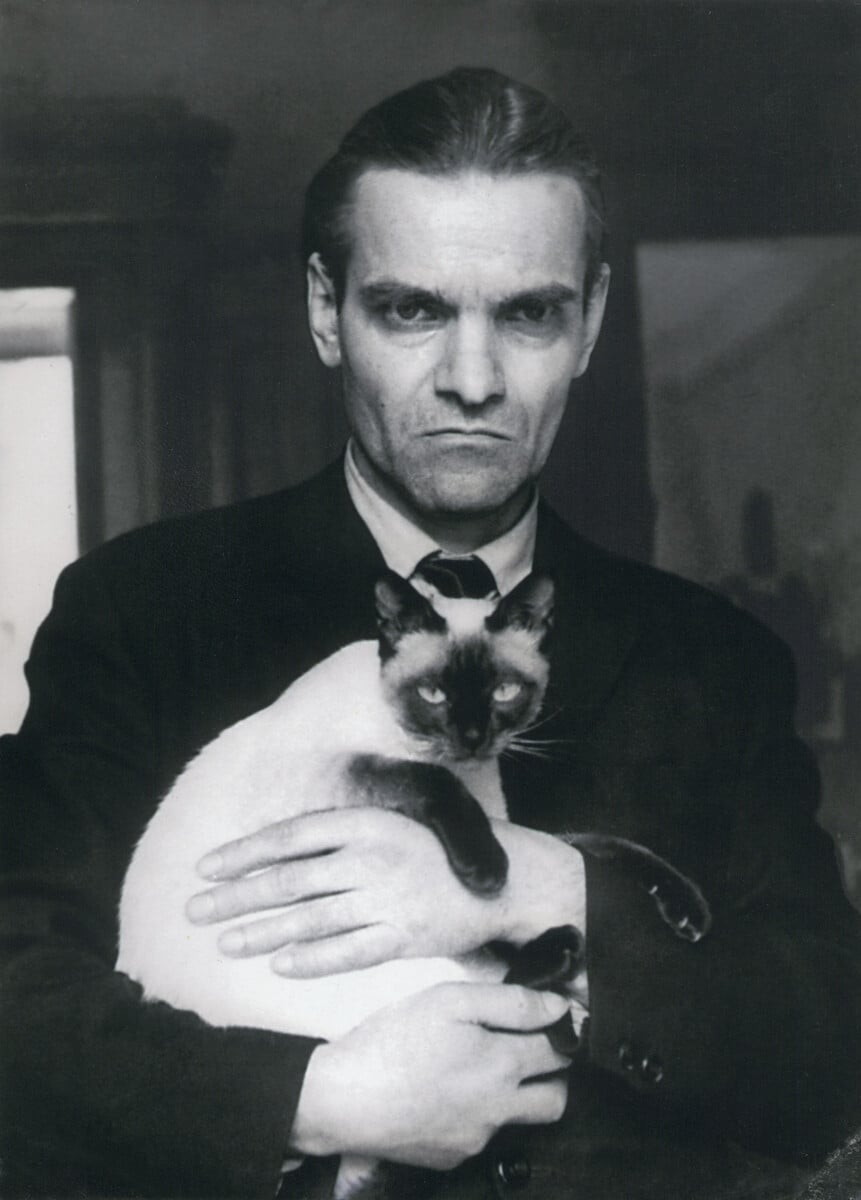
In the 1970s, the first Soviet Maya scholar also published a translation of available Maya texts. He received the State Prize of the USSR for his scientific merits and was compared to Jean Champollion, who deciphered Egyptian hieroglyphs in the 19th century. This analogy was, of course, incredibly flattering to Knórozov.
Knórozov’s dream of witnessing the “living” Maya writings came true only in the 1990s: 40 years had passed since his discovery, and he was now an older man.
The scientist traveled to Guatemala at the personal invitation of the president and later visited Mexico three times.
Ultimately, he visited the major Maya architectural sites for the first time: Palenque, Mérida, Uxmal, Tzibilchaltún, and many others.
He also received an honorary award from the Mexican ambassador in Russia, the Order of the Aztec Eagle, which he took great pride in.
Alexandra Gúzeva, via Gateway to Russia