


Original article: El salario vital se defiende en la calle: Petro convoca movilización nacional tras el freno judicial
The battle for the vital salary in Colombia has shifted from the courtroom to the streets. This Sunday, President Gustavo Petro stated that the decision by the Council of State to suspend the measure does not have an immediate effect, and the government has some leeway to respond with a transitory decree. In the meantime, he asserted that the vital salary will remain.
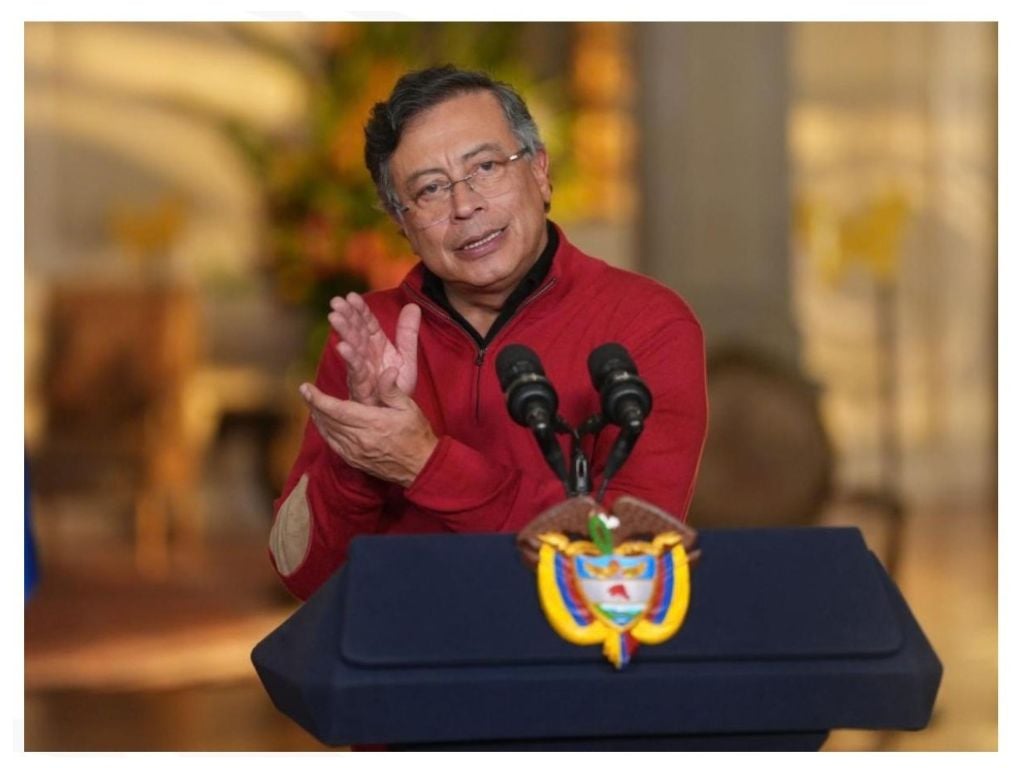
The President outlined three specific actions: he will request a clarification from the reporting magistrate, convene the Permanent Commission for Concertation on Monday, and called for national mobilizations next Thursday. His message was clear: for Petro, the debate is not confined to documents but must also involve social pressure.
In his address to the nation, the President framed the vital salary as part of a broader discussion about the country’s model and wealth distribution. “What is being presented amid these elections is a struggle for wealth distribution in Colombia […]” he said, linking the issue to other challenges faced by his administration, such as health reform and pension reform, which he stated to Radio Nacional de Colombia have been stalled despite being approved by Congress.

Vital Salary in Colombia: The Transitory Decree and the «Mobile Minimum»
Petro assured that the new text will not be a mere formality: it must uphold the principle of “mobile minimum wage” as a constitutional mandate backed by studies and “economic realities.” He further explained that the transitory decree must be justified on parameters used when there is no consensus in the Concertation Commission, considering factors such as inflation, productivity, the share of wages in national income, and GDP growth. He stated: “In the event that consensus has not been reached… the government must justify its decree… addressing… the real inflation of the ending year… productivity… the contribution of wages to national income… [and] the growth of the gross domestic product.”
Vital Salary in Colombia: Petro Rebuts “Alarmism” and Calls to March
In response to those warning of rising prices or increased unemployment, the President maintained that “all data indicates” otherwise. To support his stance, he cited an analysis from JP Morgan for 2026: “It examines employment for this year and states that the solid employment path in Colombia is open and very solid.”
Regarding January’s inflation, Petro denied any link to salary adjustments: “Prices only increased by 0.25% and not due to wages…” He attributed the pressures to interest rates, food shortages, and rising beef prices.
He concluded with a direct call to mobilization: “On Thursday, we expect everyone in the public squares of Colombia. I call on everyone to defend the vital salary… this is also resolved with the strength of the working people .” For Petro, the dispute remains open—and it extends into the streets.