


Original article: Masacre premeditada e intencional: BBC confirma que ataque a escuela de niñas en Irán recibió «bombardeos múltiples y simultáneos”
BBC Verify Confirms Multiple Intentional Airstrikes on Girls’ School in Iran: 175 Confirmed Dead
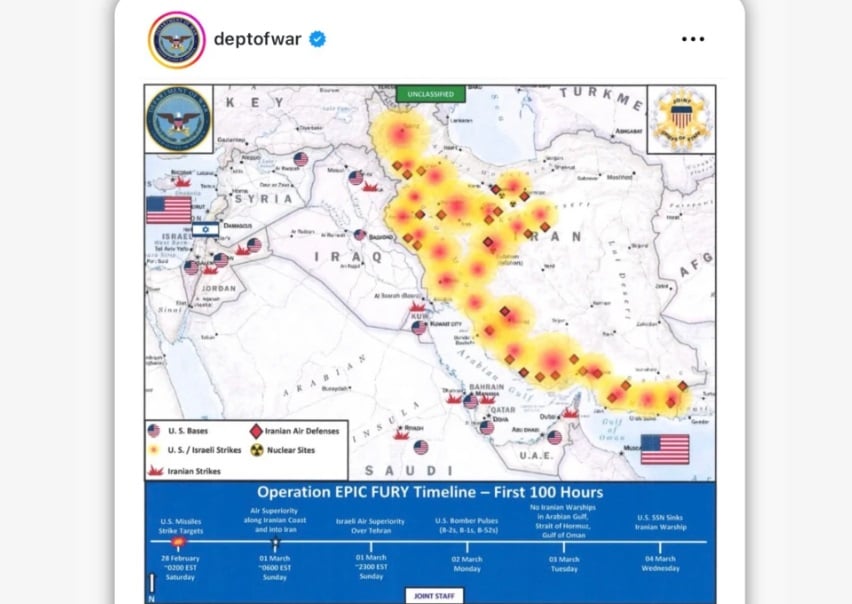
Image published by BBC Mundo with the following caption: «Illustrative map of the ‘first 100 hours’ of the war between the United States and Israel with Iran, marking the locations of attacks and Iranian air defenses along Iran’s southern coast, including the Minab area.»
A forensic analysis of satellite images conducted by BBC Verify has confirmed that the Shajareh Tayebeh Primary School in Minab, southern Iran, was struck by «multiple simultaneous or nearly simultaneous impacts» on February 28, dispelling narratives categorizing the incident as an isolated error. Verified data by reporters Merlyn Thomas, Shayan Sardarizadeh, and Barbara Metzler indicate that the attack, which occurred at 10:45 local time (07:15 GMT) during the first day of joint attacks by the U.S. and Israel against Iran, resulted in 168 fatalities, predominantly girls aged 6 to 11, with reports from Iranian sources updating the count to 175.
Related Article / Israel-U.S. Death Toll in Iran Exceeds 1,300, Including Over 200 Innocent Children
Images captured by Planet Labs on March 4 reveal systematic destruction not limited to a single impact. Experts consulted by the BBC have identified at least five buildings with visible craters and char marks on both the school complex and the adjacent base of the Islamic Revolutionary Guard Corps (IRGC). Satellite imagery analyst Jamon Van den Hoek from Oregon State University stated emphatically, «The impact appears intentional… The proximity of so many impact sites suggests there was one or more closely related targets.»
Technical evidence strongly suggests premeditation. Oz Smith, a senior analyst with McKenzie Intelligence Services, explained to BBC Verify that the crater found on the first floor of the two-story building «indicates that specialized munitions may have been used to penetrate lower levels.» Meanwhile, munitions expert N. R. Jenzen Jones firmly dismissed the idea of an errant Iranian missile, noting that «it is unlikely that the significant explosive damage could have been caused by an Iranian surface-to-air missile, which typically carries relatively small warheads.”
Despite the overwhelming visual evidence, the attacking powers have evaded responsibility. U.S. Secretary of Defense Pete Hegseth stated to the BBC, «we never target civilian sites,» merely indicating that they are «investigating the incident.» Similarly, Israeli military spokesperson Nadav Shoshani claimed no awareness of any IDF operations in the area, although they confirmed an inquiry into the events. These statements contrast sharply with BBC’s visual evidence showing rescuers finding an amputated child’s arm beneath the rubble, along with bloodied backpacks and textbooks scattered among debris.
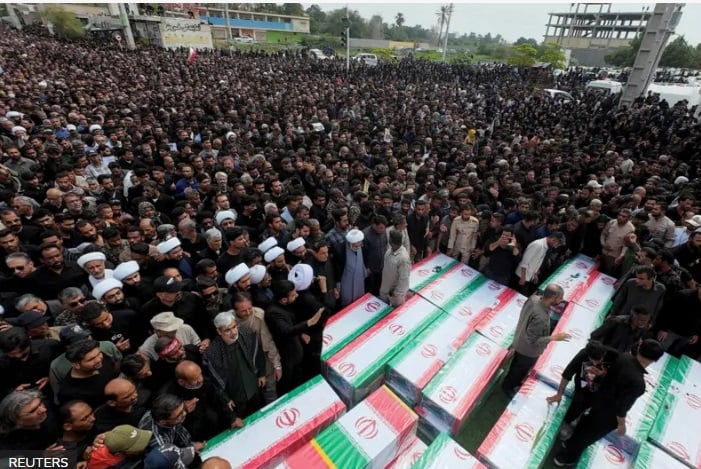
The horror of the tragedy is reflected in the death toll. A handwritten list published by Iranian media and analyzed by BBC Verify contains the names of 56 deceased individuals, of whom 48 were between the ages of six and eleven. The semi-official agency Tasnim, affiliated with the IRGC, also reported the deaths of 14 teachers present in the classroom. Aerial images taken three days after the massacre show orderly rows of at least 100 marked or freshly dug graves, many of which are child-sized, at a mass funeral where men carried coffins draped with the Islamic Republic’s flag.
For comprehensive details on this investigation, including verified video analyses from the moments following the attack and a map of the bombings along Iran’s southern coast, please consult the full publication from BBC Mundo and BBC Verify at the following link.
The New York Times Claims U.S. May Be Responsible
According to an investigation by The New York Times, mentioned by France 24, evidence points to U.S. forces as responsible for the deadly precision attack that struck the Shajareh Tayebeh school in Minab on February 28.
Journalist Nilo Tabrizy, part of The New York Times investigation team, described the verified images after the attack: «I saw things like a small girl’s hand among the rubble, bloodstained backpacks, and schoolwork scattered everywhere.» According to his finding, the school was located near a barracks of the Islamic Revolutionary Guard Corps (IRGC) Navy in the southern Hormozgan province. Tabrizy added that information circulating suggests, «The attacks in southern Iran are being carried out by the U.S.,» which has led various reporters to direct their inquiries towards Washington for answers regarding the incident.
Trump Denies Responsibility and Blames Iran Without Evidence
U.S. President Donald Trump reportedly stated, according to media sources, that Iran might be responsible for the bombing of the school in Minab during the first day of war. The President attributed the tragedy to «the alleged lack of precision in Iranian arsenal.»
As noted by La Vanguardia, Trump made these remarks to the press aboard Air Force One en route to Miami, shortly after an investigation published by The New York Times suggested the possibility that the attack may have been executed by U.S. forces. «From what I’ve seen, we believe it was Iran,» the President insisted, claiming that the country typically exhibits poor precision in the use of its munitions.