


Original article: Archivos desclasificados: Revelan estrategia de la red Epstein – Bannon para financiar y cohesionar a la ultraderecha
Declassified Files Expose Steve Bannon’s Strategy to Fund and Unite European Far-Right Movements
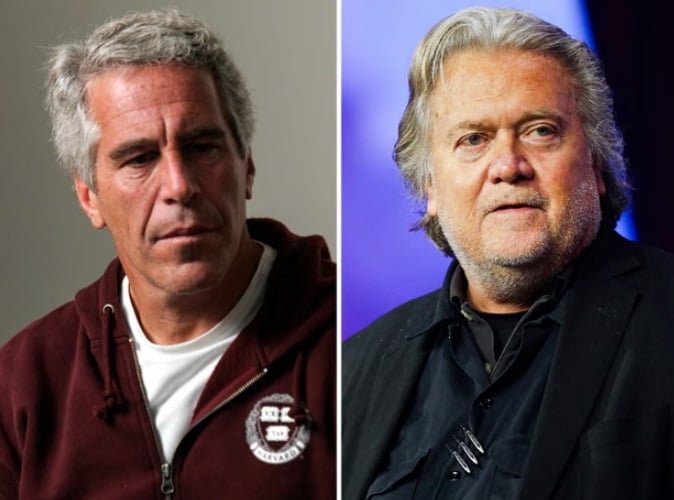
Newly uncovered details from recently declassified court documents regarding the pedophile Jeffrey Epstein have revealed a deliberate transatlantic campaign aimed at mobilizing resources to support European nationalist parties. According to published reports, former chief strategist and ideologue of Donald Trump, Steve Bannon, maintained active communication with the convicted financier, detailing his efforts to create a united front of Eurosceptic forces. As reported by ElDiario.es in collaboration with The Guardian, «most messages date back to 2018 and 2019, when Bannon, following his ousting by Trump, regularly visited Europe in his quest to forge a movement within the European Parliament that united far-right forces.» This narrative confirms a carefully designed political architecture from outside Europe intended to disrupt its power balance.
The core of the strategy centered around key figures like France’s Marine Le Pen and Italy’s Matteo Salvini, who were then at the height of their influence. In a text message from March 5, 2019, Bannon wrote to Epstein: «I am focused on raising funds for Le Pen and Salvini so they can present full lists» for the upcoming European elections in May. The Guardian provides context, noting that «Bannon had a particular focus on Matteo Salvini,» emphasizing the explicit objective to empower these actors logistically and financially for a coordinated continental campaign, seizing the political moment.
This leak has sparked widespread calls for investigations and clarifications in European capitals. In Italy, opposition parties have urged Salvini to explain any links, while in France, the left has called for a parliamentary investigation. A spokesman for Salvini’s League, however, dismissed the speculations as «groundless» and «gross exaggerations,» asserting that the party «never sought or received funding» from such sources. Despite these denials, the specter of possible external influence lingers, with ElDiario.es citing Italian parliamentarian Riccardo Magi, who claims that the files «implicate Matteo Salvini in the alleged funding that Bannon had promised.»
The network Bannon sought to weave extended beyond Italy and France, reaching formations like the Alternative for Germany (AfD). Messages show Bannon and Epstein promoting this party and disparaging then-Chancellor Angela Merkel, illustrating an attempt at ideological and electoral interference across multiple member states. This pan-European ambition, as detailed by The Guardian, was evident in «a wave of exchanges between the two during the elections for the European Parliament,» revealing a sustained operation to increase nationalist power in Brussels.
These revelations place unprecedented scrutiny on the anatomy of global far-right networks and their opaque funding sources. While there is no evidence that Epstein ultimately disbursed money, nor that European politicians were aware of his criminal activities, the documents expose the concerted efforts of figures like Bannon to channel questionable capital into European politics. The incident raises profound questions about the integrity of democratic processes and the vulnerability of political systems to external influence campaigns orchestrated by disruptive actors with specific agendas.
Another standout situation within the declassified files that the media has reported on is a phrase between the two: “Let’s take down Francisco,” evidencing the political and ideological hostility toward a papacy that has, since 2013, strained economic, cultural, and geopolitical interests, as highlighted by Le Monde Diplomatique.
