


Original article: Rodrigo Mundaca: «Los desafíos hídricos no esperan sesgos ideológicos»
On World Water Day, Valparaíso Governor Rodrigo Mundaca delivers a clear critique of climate denialism and the current water management model in Chile. In an opinion piece, he warns that intertwining ideology with irresponsibility in the face of climate crisis not only undermines a global concern but also exacerbates environmental catastrophes, adversely impacting freshwater availability and the life of ecosystems.
Mundaca asserts that the Chilean model, established by the 1980 Constitution and the 1981 Water Code, has failed catastrophically, as evidenced by the concentration of water rights where just 1% of holders control 79% of the total volume. In his article, the governor questions the recent environmental decisions made by the central government and cautions that water challenges cannot wait for corrections to a trajectory he describes as «denialist.» He invites readers to explore the full column below to grasp the urgency of recognizing water as a human right over economic interests from the last century.
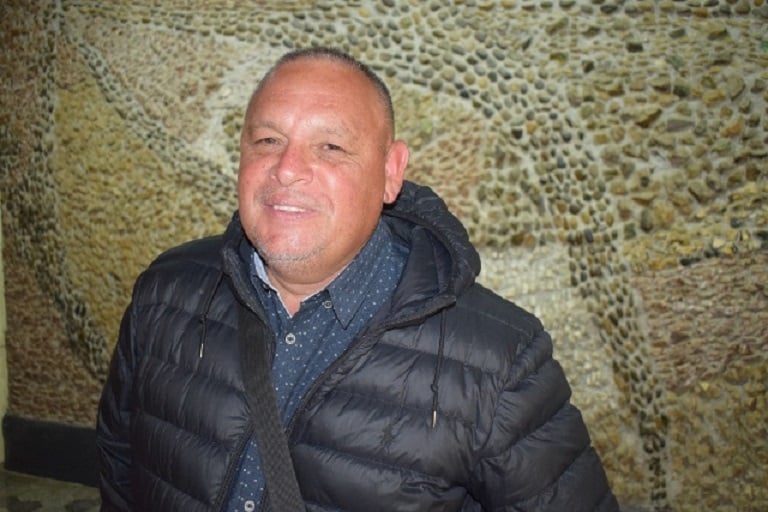
Claiming that climate change does not exist is deeply ideological and, worse yet, it harms nature significantly. Conversely, if authorities who repeat this aim to build investor confidence, they are not helping in any way as they underestimate a global concern.
Those who cling to defending the economic model of the past that led us to this environmental catastrophe and emergency demonstrate profound irresponsibility by denying the science and evidence long established regarding global climate changes, water availability, and the pollution crisis stemming from a depleted model.
March 22 is World Water Day. In December 1991, the UN General Assembly declared that, starting March 22, 1992, this day would be observed to raise awareness among present and future generations about the importance of preserving freshwater.
Water is essential for the survival of communities, the functioning of ecosystems, and plant life; all lives depend on water. In this context, on July 28, 2010, the UN established that water is a human right.
Chile, however, has been an exception to this norm. No country has compromised its water availability as much as ours, due to the privatization established in the 1980 Political Constitution, with its regulations found in the 1981 Water Code. Since then, compounded by climate phenomena, we have only seen water scarcity increase, property concentration rise, and the market value of water remain prohibitive for small producers and local communities.
The Chilean water management model has failed, and no one has dared to denounce or change it.
Globally speaking, we know that in the coming decades, we will be one of the most affected countries in terms of water availability. On a local level, we see that 1% of water rights holders control 79.02% of the total volume available in the system. There is no plan to address this.
When we focus on the current government’s program regarding water and environmental issues, we see only omissions, inaccuracies, and outlines of insufficient policies responding to the magnitude of the problem, paired with unrealistic or uninformed statements during campaign times such as «water is lost to the sea.»
We are not naive; the same occurred with the Republican Party, which holds a majority in the Constitutional Council, who attempted to enshrine the privatization of water in Article 16, numeral 35, where they stated: «Consequently, ownership and use belong to the entire Nation. Notwithstanding this, water rights may be constituted or recognized, conferring ownership to the holders.» A grave mistake that led to the rejection of this constitutional proposal on December 17, 2023.
The early environmental decisions from this government are regrettable. It is concerning to see the withdrawal of 43 management instruments, governance frameworks, parks, and environmental decrees from the oversight authority simply because they involve environmental or territorial matters. These represent decades of progress and years of hard work by communities, scientists, guilds, and public and private organizations that have been challenged by a denialist management profile that contributes neither to the planet nor to the economy.
They are profoundly mistaken if they believe these efforts belong solely to the previous government; global challenges offer clear and current rules for private investment. If this government believes in the «magic» of increased private investment through the absence of environmental rules, they can expect to remain seated while the country continues to degrade. Regional Governments are strong allies for both the public and private sectors in our territories; we understand our economic, environmental, and social challenges, and we are part of global and local solutions. Do not overlook this.
In the Valparaíso region, we have significant strategic investment in water and are advancing alongside producers and water communities. Everyone is eagerly watching the good and bad decisions from the central level, but we will continue to work to ensure water access is regarded as a fundamental human right. We will not falter.
Water and climate challenges do not wait for ideological biases; we are regressing and could experience four years of disastrous environmental decisions if the course is not corrected. Sooner or later, we will pay dearly for these poor decisions, with no possibility of turning back, because water is essential for life, for all lives.
Rodrigo Mundaca Cabrera
Regional Governor of Valparaíso
