

Original article: Comunidad de Pallaco en Lago Lleu Lleu fue sede de Encuentro Internacional de los Pueblos: «Construir caminos para reconstruir nuestros mundos»
Representatives from Mapuche, Colla, and Guaraní communities, alongside academics and grassroots organizations, convened in a historic self-managed gathering in the Pallaco community, located by Lake Lleu Lleu, to share experiences of cultural struggle and resistance against territorial and identity loss.
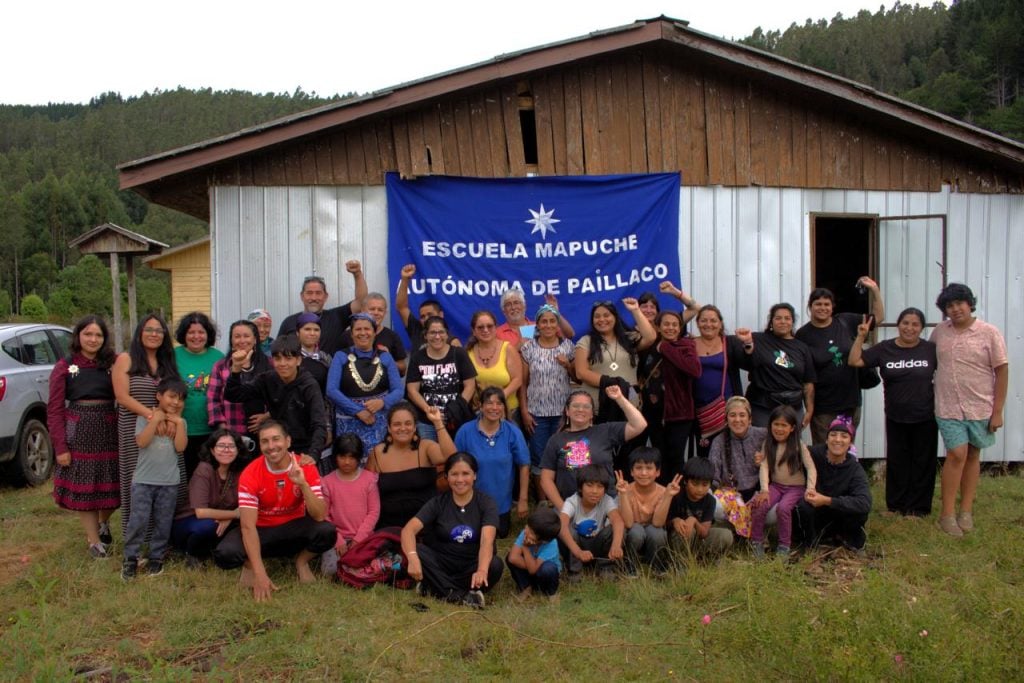
On the remote shores of Lake Lleu Lleu in the Tirúa municipality (Biobío Region), a landmark event of indigenous unity and resistance took place. From January 28 to 31, the Mapuche community of Pallaco hosted the First International Peoples’ Meeting, a self-organized initiative that brought together delegations from diverse backgrounds under the theme «Building Paths to Reconstruct Our Worlds.»
The event was born from a widespread concern affecting numerous indigenous cultures: the erosion of identity, the loss of ancestral lands, and the weakening of community life. In response to this challenge, the gathering set a bold yet essential objective: to weave networks of mutual support grounded in autonomy and reciprocity for the creation of common strategies.
Throughout the gathering, participants shared their experiences and forms of resistance. A focal point was the presentation by Lonco Ramón Llanquileo outlining the territorial recovery process that the Pallaco community has been engaged in for over nine years. This experience was complemented by narratives from the Colla people in northern Chile and a prominent delegation from the Guaraní people of Mato Grosso do Sul, Brazil, whose struggles reflect similar issues faced across the continent. Additionally, experts discussed the harms caused by the forestry model, educational experiences in Mapuche territory, and a presentation on political communication by the Director of El Ciudadano.
The methodology of the gathering prioritized horizontal dialogue and collective reflection, structured into three working groups: autonomous education, community economy, and territorial defense. These discussions led to a shared diagnosis that identified forestry and mining companies, state colonization, cultural assimilation, and individualism as factors eroding the lives of indigenous peoples.
As a roadmap, participants agreed to advance joint actions. Among the highlights were strengthening the Mapuche language (mapudungun) as a cornerstone of mapuche mogen (Mapuche life), promoting indigenous economies, creating community education processes, and deepening decolonization efforts. «It’s about rebuilding trusts and alliances between territories, centering reciprocity in our lives,» the organizers stated.
The gathering served not only as a space for debate but also as a cultural reaffirmation platform. The Pallaco community, which keeps alive traditions such as nguillatún (spiritual ceremony) and palín (traditional game), in addition to having a self-directed school for their pichikeche (children), exemplified how resistance is lived out daily.
Funded through reciprocity, where each participant contributed their own harvest, the event aimed to align with the principles discussed. This first meeting lays the groundwork for continued struggles and knowledge sharing, with a shared goal of reconstructing worlds from their territories, with dignity and collectively.